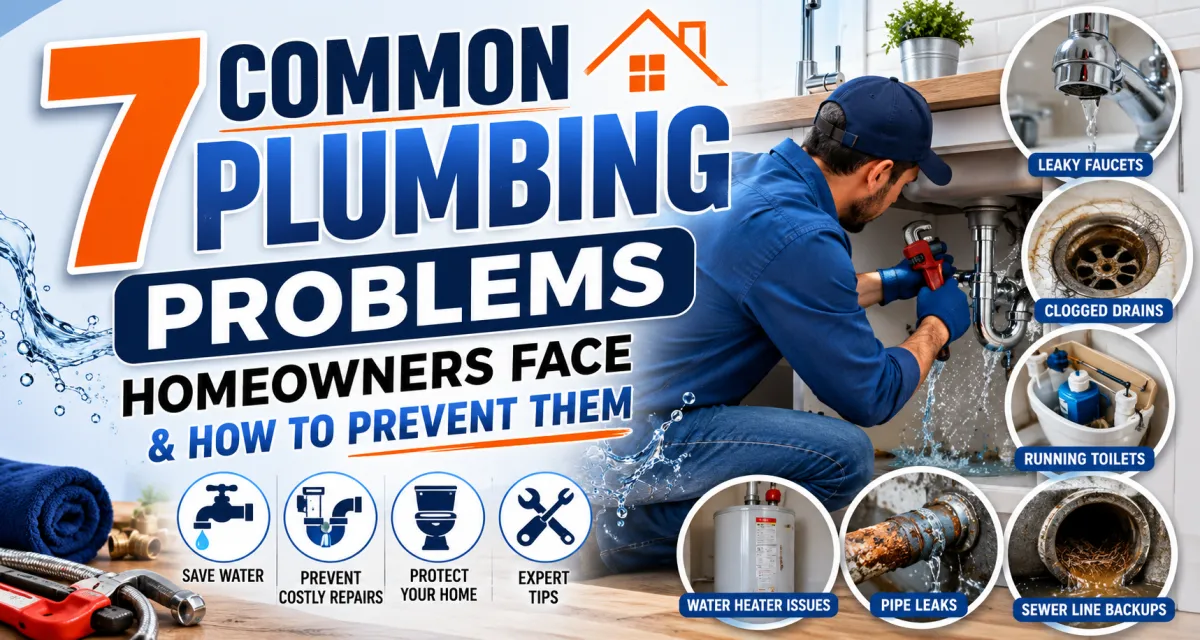
7 Common Plumbing Problems Homeowners Face And How to Prevent Them
Why Plumbing Education Matters for Homeowners:
Most homeowners don’t think about their plumbing system until something goes wrong. A small leak, slow drain, or drop in water pressure can quickly turn into a costly repair if ignored for too long.
As a plumber, educating homeowners helps build trust and positions your business as the go-to expert in your local market. When homeowners understand the warning signs of plumbing issues and know who to call for help, they’re far more likely to contact a trusted professional instead of waiting until the problem becomes an emergency.
In this article, we’ll break down seven of the most common plumbing problems homeowners experience, what causes them, and how they can prevent expensive damage.
1. Leaky Faucets:
A dripping faucet might seem like a minor annoyance, but it can waste hundreds of gallons of water over time and increase utility bills.
Common Causes:6
Worn-out washers or O-rings
Corroded valve seats
Loose parts inside the fixture
High water pressure
Prevention Tips:
Fix small drips immediately
Schedule routine plumbing inspections
Avoid overtightening faucet handles
Replace aging fixtures before they fail
When to Call a Plumber:
If a faucet continues leaking after basic repairs or if you notice rust, low pressure, or water damage around the sink, it’s time to call a professional.
2. Clogged Drains:
Clogged drains are one of the most common reasons homeowners call plumbers. Kitchen sinks, showers, and bathroom drains are especially vulnerable.
Common Causes:
Grease buildup
Hair accumulation
Soap scum
Food scraps
Foreign objects flushed down drains
Prevention Tips:
Never pour grease down the sink
Use drain strainers in showers and sinks
Avoid flushing wipes, paper towels, or hygiene products
Flush drains monthly with hot water
Warning Signs:
Slow drainage
Gurgling sounds
Bad odors
Water backing up
Ignoring these warning signs can eventually lead to severe blockages or damaged pipes.
3. Low Water Pressure:
Low water pressure can make simple daily tasks frustrating and may indicate a larger plumbing issue.
Common Causes:
Mineral buildup in pipes
Hidden leaks
Corroded plumbing lines
Faulty pressure regulators
Municipal water supply issues
Prevention Tips:
Install a water softener if you have hard water
Replace old galvanized pipes
Check fixtures regularly for buildup
Schedule annual plumbing maintenance
Why It Matters:
Low water pressure often signals a hidden issue that can worsen over time. Addressing it early can prevent pipe damage and costly repairs.
4. Running Toilets:
A running toilet can waste a significant amount of water every day and quietly increase water bills.
Common Causes:
Worn flapper valves
Improper float height
Faulty fill valves
Loose toilet components
Prevention Tips:
Inspect toilet components annually
Replace worn parts promptly
Avoid using chemical cleaners inside the tank
Professional Insight:
Many homeowners ignore running toilets because they seem harmless, but prolonged water waste can become expensive over time.
5. Water Heater Problems:
Hot water is essential for everyday comfort, and water heater issues can disrupt an entire household.
Common Signs of Trouble:
Inconsistent hot water
Strange noises from the tank
Rust-colored water
Water is pooling around the unit
Rising energy bills
Prevention Tips:
Flush the tank annually
Replace the anode rod when needed
Keep the temperature set appropriately
Schedule regular inspections
Important Note for Homeowners:
Routine maintenance can significantly extend the life of a water heater and reduce the risk of sudden failure.
6. Pipe Leaks:
Even a small pipe leak can cause serious structural damage if left untreated.
Common Causes:
Pipe corrosion
High water pressure
Freezing temperatures
Loose fittings
Aging plumbing systems
Prevention Tips:
Insulate exposed pipes during winter
Monitor water pressure
Watch for unexplained increases in water bills
Check walls and ceilings for water stains
Why Early Detection Matters:
Hidden leaks can lead to mold growth, wood rot, and expensive restoration work. Quick repairs save homeowners money and protect their property.
7. Sewer Line Backups:
Sewer line problems are among the most serious plumbing emergencies homeowners can face.
Common Causes:
Tree root intrusion
Pipe collapse
Grease buildup
Flushing inappropriate materials
Aging sewer systems
Warning Signs:
Multiple drains are backing up
Sewage odors indoors
Gurgling toilets
Water backing up into tubs or showers
Prevention Tips:
Avoid flushing wipes or grease
Schedule sewer camera inspections
Address slow drains early
Maintain trees near sewer lines
Why Preventive Plumbing Maintenance Is Worth It:
Many major plumbing emergencies start as small, manageable issues. Regular plumbing inspections help homeowners identify problems early, avoid water damage, and reduce long-term repair costs.
For plumbers, educating customers about preventive maintenance builds credibility and encourages long-term customer relationships.
Homeowners appreciate professionals who focus on solutions, transparency, and prevention, not just emergency repairs.
Final Thoughts:
Plumbing problems can quickly become stressful and expensive when ignored. By understanding the warning signs and investing in preventive maintenance, homeowners can protect their property, improve efficiency, and avoid unnecessary repairs.
For local plumbers, sharing educational content like this helps establish authority, build trust, and stay top of mind when homeowners need reliable plumbing services.
If you’re a homeowner experiencing any of these plumbing issues, contacting a licensed plumbing professional early can save time, money, and frustration.
